By Ciara Peters, Top of Ladder
A version of this article was also published in Neighbours of Nanoose Bay
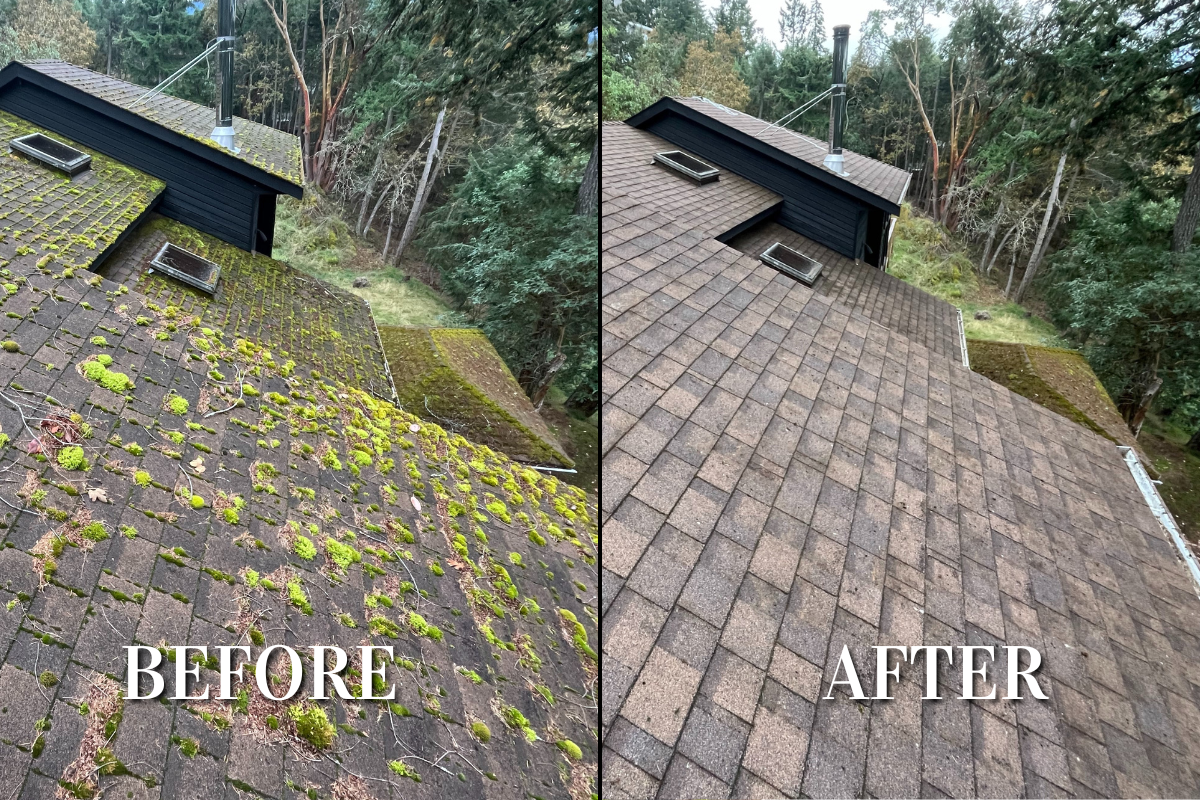
As spring arrives, new growth appears everywhere—from trees to gardens. But have you noticed a touch of green on your roof? While some may find it gives a rustic charm, moss growth can lead to significant damage and costly repairs. Keeping your roof free of moss and other unwanted growth is essential for maintaining the integrity of your home.
Identifying Moss, Algae, Lichen, and Fungus on Your Roof
Different types of growth can appear on your roof, often in combination. Here’s how to identify them:
Moss – Green, feathery, and carpet-like, often found clumping along shingle edges or blanketing the roof.
Algae – Dark and streaky, especially visible after the wet months.
Fungus – White, gray, or brown patches, typically found in shaded areas.
Lichen – A combination of fungus and algae that forms light-colored patches. It can have a slimy or powdery texture.
Why are These Growths a Problem?
Unchecked moss often invites other plant growth and can lead to several serious issues:
Trapped Moistureand Shingle Integrity – Moss and algae retains moisture, preventing your roof from properly draining the rain and leading to accelerated deterioration. The roots often penetrate and break down the shingles, causing moisture to wick underneath. Over time this can cause leaks.
Structural Damage – Fungal growth can spread to the supporting wood on the edge of the roof, compromising it and causing rot.
Reduced Curb Appeal – A moss-covered roof can lower a home’s value, making it less attractive to potential buyers.
Pest Attraction – Moisture-loving pests, including insects and rodents, attracted to the moss, further damaging your roof by burrowing or finding a home in the attic.
How to Prevent Moss and Other Growth
Keeping your roof in top shape requires regular maintenance. Here’s what you can do:
Tree Trimming – Trim branches back from the house. This prevents friction on shingles and minimizes falling debris that can encourage moss growth.
Regular Inspections – Get the roof checked, especially in the spring to catch early signs of moss or damage from the previous winter storms.
Routine Cleaning – Remove loose debris like pine needles, leaves and branches from the roof. Never pressure wash or aggressively brush asphalt shingles, as this can strip away their protective gravel layer. If unsure, we recommend hiring a professional.
Bonus tip – Clean the gutters at least once a year (or more often in wooded areas) to prevent moisture buildup that promotes moss growth.
A final note, when a roof is too damaged, moss removal may not be worth the cost since a roof replacement is likely needed. A professional, like Erwin, can assess the options with you. Please reach out if you have any questions or if you would like assistance with your exterior home maintenance, we’re here for you. We live, work and play here in Nanoose—let’s keep our homes looking their best!